Additive product development
Rhino Para 3 Pocket Opener
A 3D-printed, zero-play attachment that gives a Spyderco Para 3 Emerson Wave-like pocket deployment while preserving manual thumb access.
- Period
- 2024–2025
- Role
- Independent designer, prototyper, and tester
- Methods
- Parametric CAD · FDM · Tolerance Design · Product Testing
Engineering Challenge
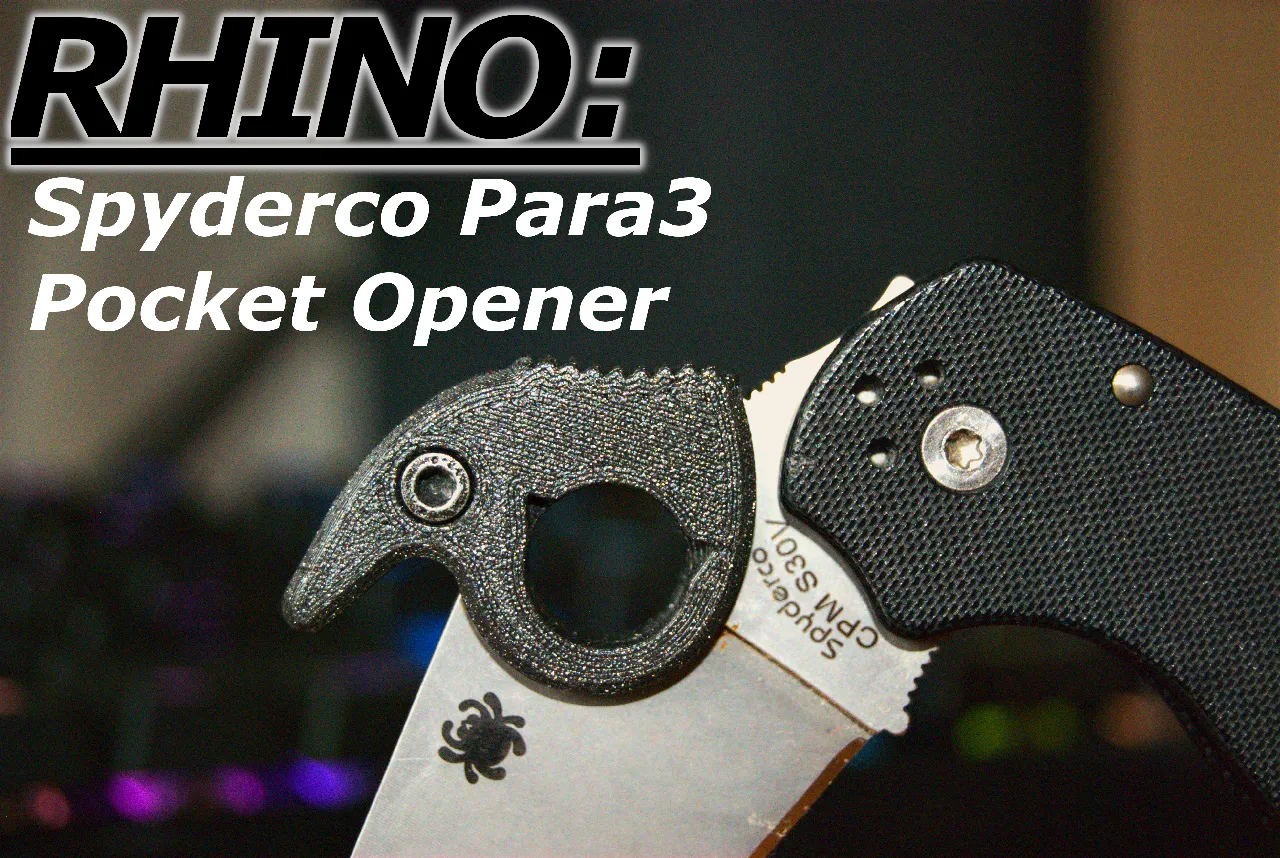
Create a compact printed attachment that would catch a pocket edge and open the blade during a normal draw. It needed to lock onto the existing blade geometry without play, sit cleanly beside the stock scales, remain comfortable in hand, and preserve access for conventional thumb opening.
Approach
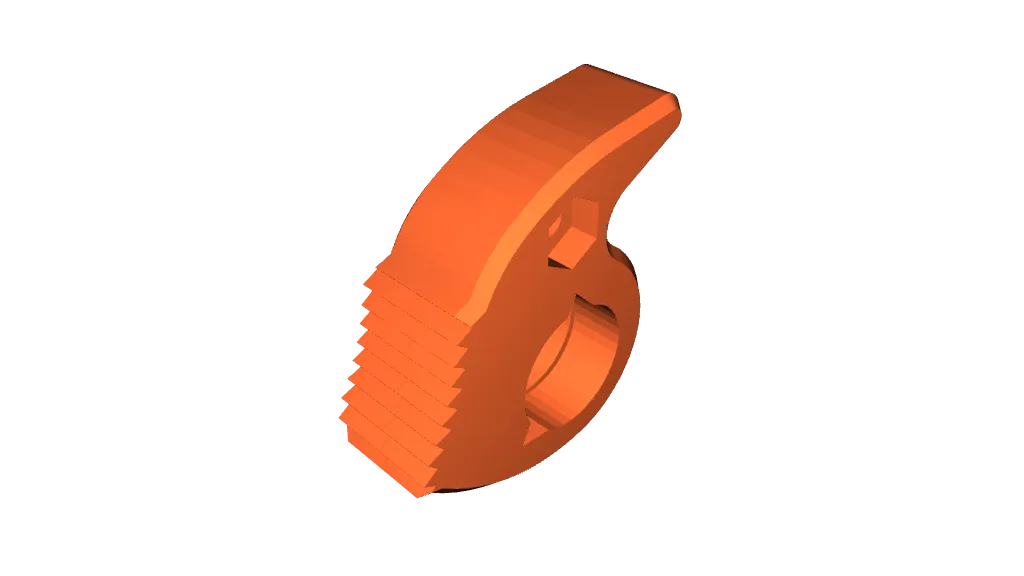
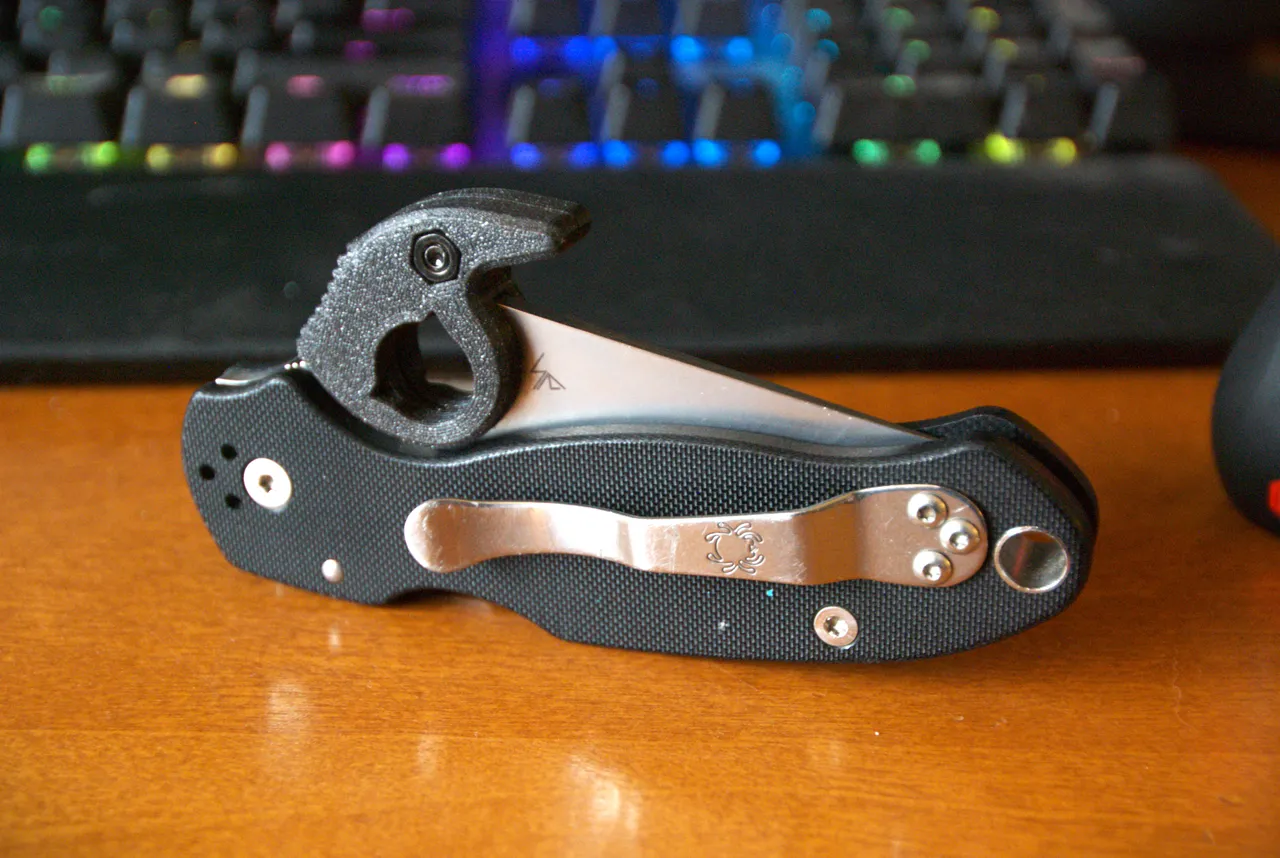
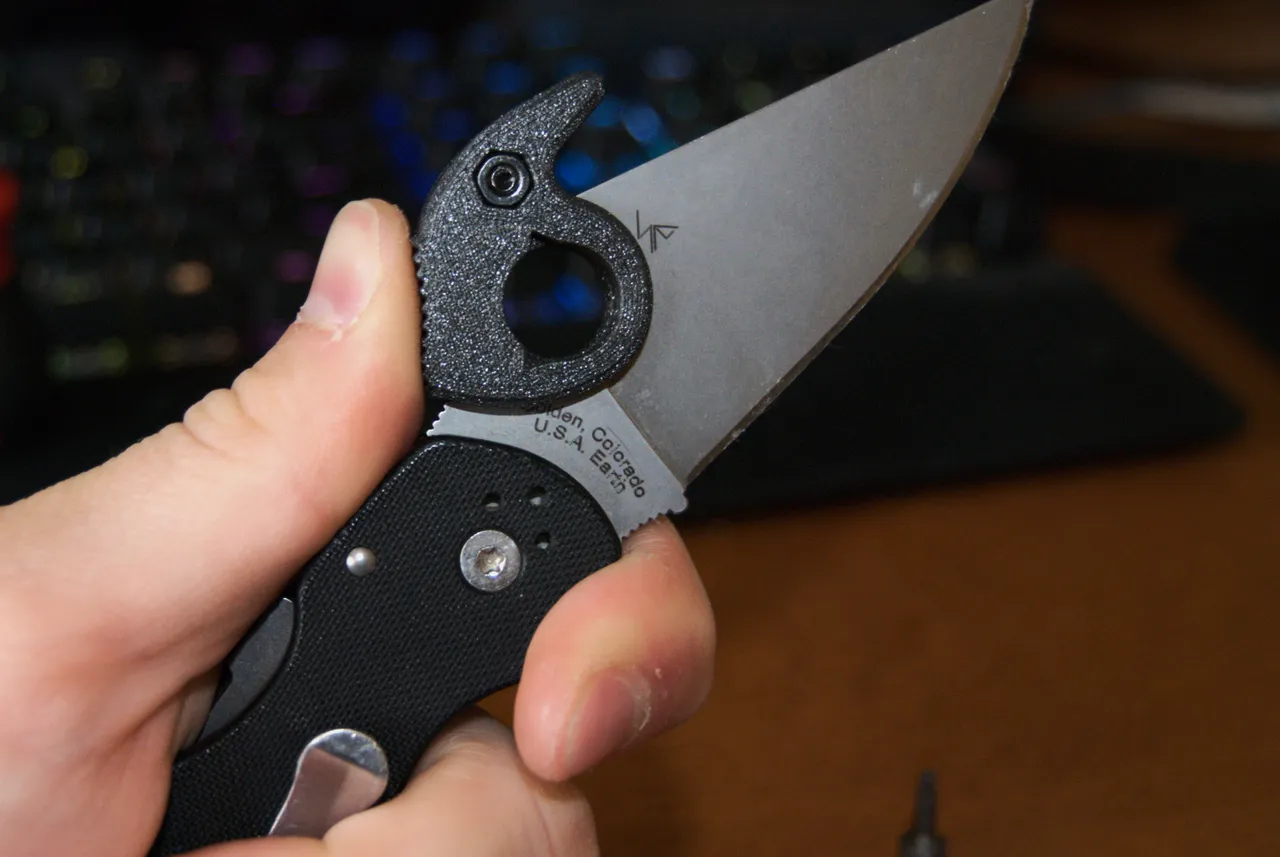
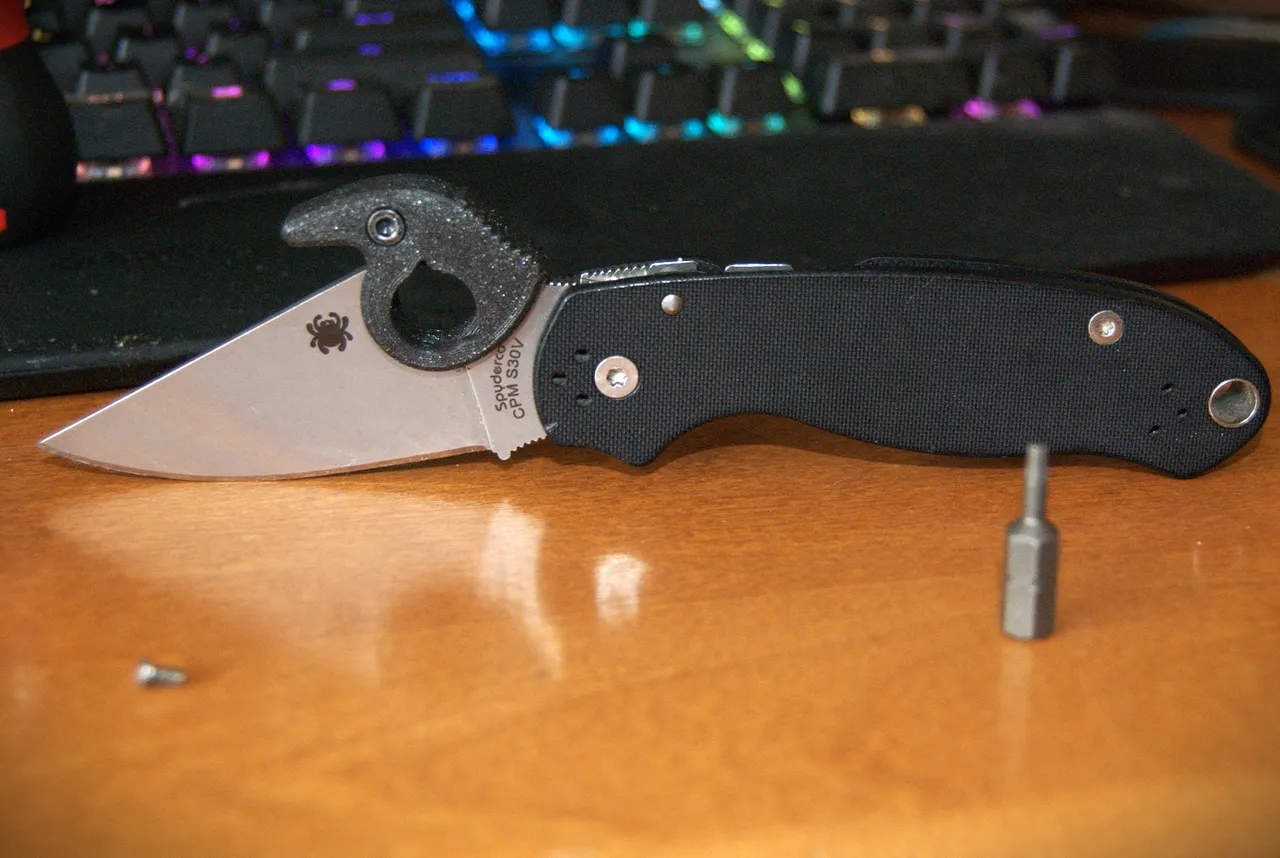
I moved through extensive fit revisions, using the real knife as the reference for contact geometry and clearance. The final design clamps around the opening hole with one M3 socket-head screw and nut. Ramped blade-contact faces remove horizontal play, while a hollow center and triangular cutouts retain access to the factory opening feature. I added jimping for control and kept the attachment flush with the stock scale thickness.
Results
The final PETG-ready design produced a secure, zero-play fit and a repeatable one-handed pocket deployment. Nearly a year of everyday carry use provided the practical durability check, and the finished model was released publicly on Printables for other Para 3 owners to make.
Control the Blade Through Contact Geometry
The interface had to resist shifting without modifying the knife. A split clamp uses the existing opening hole as its primary locating feature, while ramped faces bear against the blade to remove horizontal movement. One standard M3 fastener supplies the clamping force and keeps assembly simple.
Add Function Without Blocking the Original One
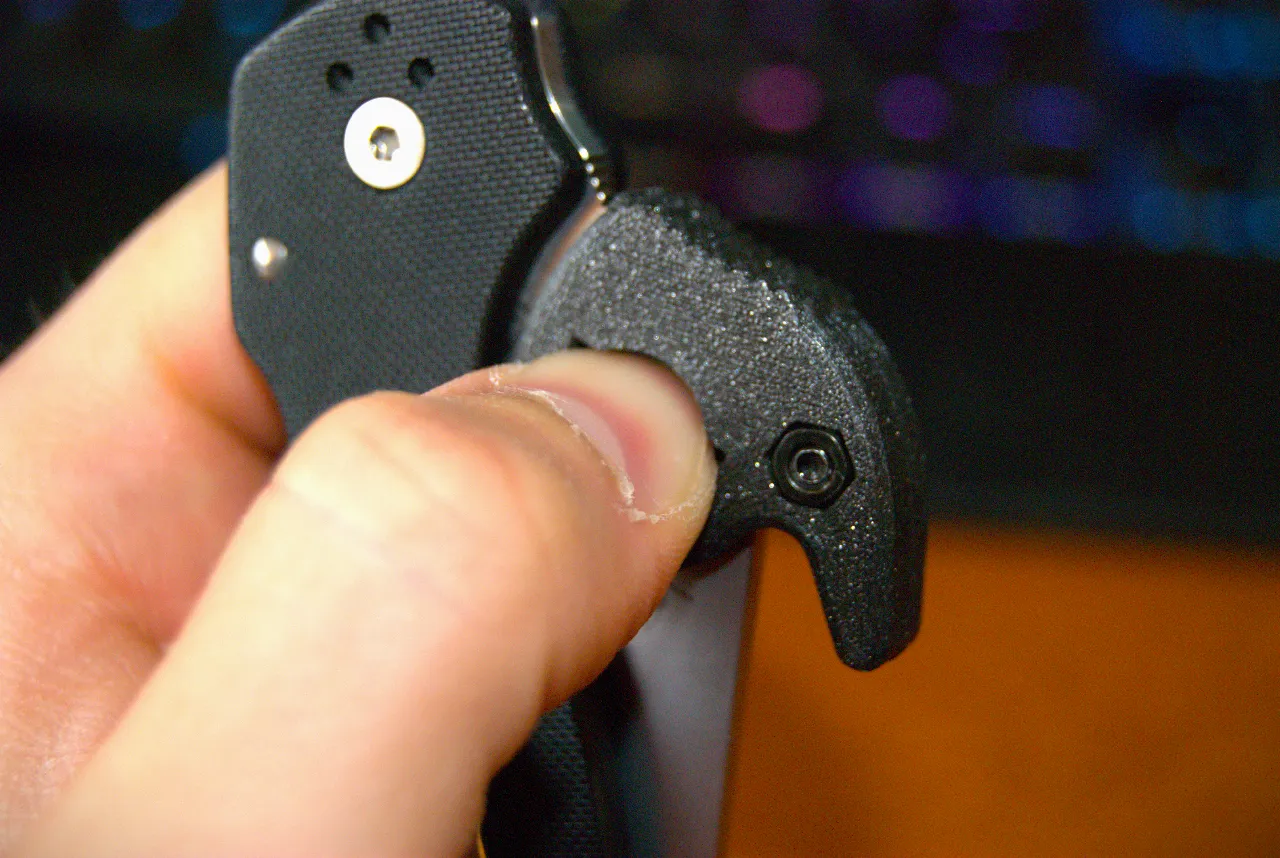
The raised hook provides the surface needed to catch the pocket and also creates a larger thumb contact area. Jimping improves control, the outside faces align with the stock scales, and the hollow center plus triangular reliefs keep the Spyderco opening hole usable from either side.
Research the Market Before Refining the Answer
I developed the concept independently, then learned after building it that a metal solution already existed. That discovery did not erase the engineering value of the work, but it made the process lesson clear: competitive research belongs near the beginning of product development, before significant time is invested in refinement.
Key Outcomes
- Achieved a zero-play interface with one M3 screw and nut
- Preserved manual opening access through hollow and triangular cutouts
- Validated everyday durability and deployment through nearly a year of carry
- Published the original design and print guidance for the maker community
In-Pocket Demonstration
The hook catches the pocket edge during the draw, rotating the blade open in one continuous motion.
Related Links